
Pugs • Look beyond a surgery benefit

Choose pug cover beyond the main procedure

A policy should be assessed against the parts of a pug’s possible care that matter to you, including specialist examinations and continuing treatment.

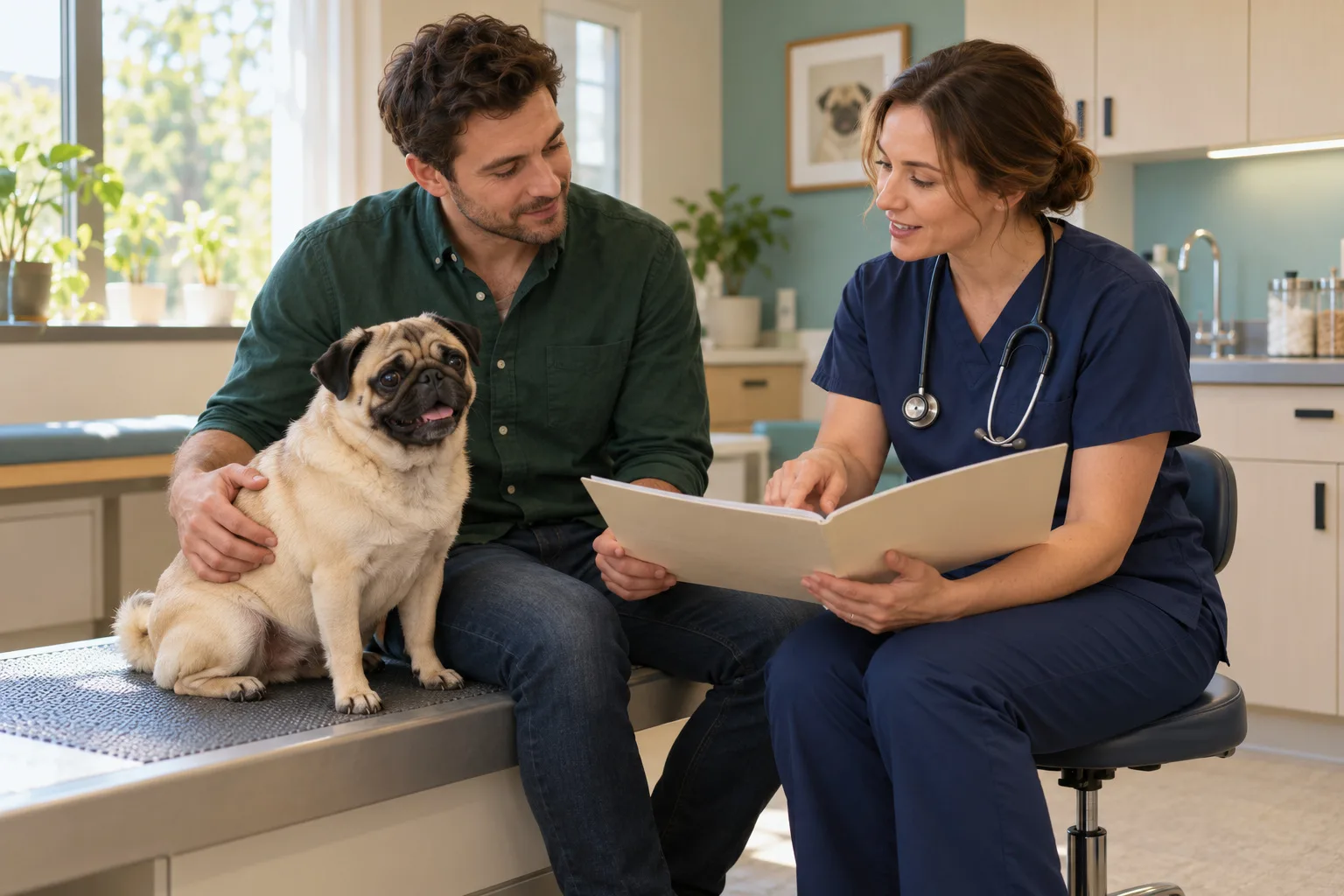
A fawn pug with its owner and a veterinary professional during a calm consultation
✓ Policy-first ✓ Independent ✓ Useful checks
Direct answer
For a pug, shortlist policies that address eligible inherited and congenital disease, then compare eye care, airway-related treatment and the services around them. Pets Best and Embrace are useful candidates for selected medical benefits; Trupanion is a different candidate when its per-condition design and usable direct-payment route matter. None is automatically best for every pug, and prior symptoms can change the answer completely.
Pet profile

Use two different care questions, not one breed checklist

Pugs’ short-faced anatomy makes both eye and airway questions relevant. The Royal Veterinary College describes corneal and other eye problems in brachycephalic dogs, as well as breathing and skin concerns. This evidence identifies topics for a veterinarian and insurer to address; it does not diagnose your pug or predict a claim.

Consider two hypothetical future files: an eye problem requiring repeated assessments and medication, and an airway problem requiring specialist investigation and treatment. A product can perform differently across these files because ordinary examination fees, prescriptions and surgical charges may be treated differently. Do not combine all of them under a single “breed conditions covered” tick.

If your pug already has squinting, discomfort, breathing changes or another concern, arrange veterinary assessment rather than waiting for insurance. The clinical urgency belongs to the treating team; a quote cannot determine it.

FAQ

Three designs deserve different questions

Candidate Reason to investigate Question that could change the choice
Pets Best Eligible inherited/congenital illness scope with medical expense selections. Does this version retain the examination and drug benefits needed for repeated visits?
Embrace Published specialist and rehabilitation benefits, with examination/prescription choices. Which selections and limits apply to the proposed eye or airway care?
Trupanion Per-condition deductible and participating-hospital direct payment. What ordinary exam costs stay yours, and can the actual hospital use the payment route?

The shortlist is selective, not a market-wide top-three award. Read the actual offered state form. A diagnosis that qualifies in principle may still be pre-existing for this animal, and enrollment acceptance does not settle the payment on a particular procedure.

What to know

Repeated visits can change the apparent winner

Suppose a fictional eligible episode involves four medical consultations at $120 each, plus separately billed treatment. Those consultations total $480. Under a fictional option that includes them, with the deductible already met, an 80% insurer share and no applicable cap, they would produce $384 in payment. Under an option that excludes them, those lines produce no payment. No insurer price or formula is represented by this illustration.

Compare the actual extra premium for the consultation benefit with the value it would provide under several plausible visit patterns. Do not assume four visits will occur; use the exercise to ask whether repeated assessment is a cost you are willing to retain. The treating veterinarian decides the necessary visit schedule.

Now run the airway file separately. A surgical benefit may matter more there, but ask about consultation, pre-procedure testing, hospitalization and recovery services too. A policy should not receive credit for all these lines merely because one operation is covered.

Decision guide

Let this pug’s record determine the final shortlist

Separate breed predisposition from documented signs. A breed alone does not establish disease, but an earlier symptom can matter even before a definitive diagnosis. Ask the insurer to distinguish an inherited-condition provision from the individual pre-existing-condition assessment. Neither answer substitutes for the other.

For each finalist, retain the eligibility answer, selected service benefits, owner-share calculation and actual payment arrangement. If the eye question is unresolved, leave it unresolved; do not let a higher annual limit hide it. If an airway issue is already excluded, evaluate the remaining protection without describing the policy as a solution for that issue.

Your best fit might emphasize manageable recheck costs, capacity for a major eligible treatment or a confirmed clinic-payment route. Choose for the constraint that matters to your household, then compare the complete premiums. This guide has not measured claim service or collected live pug prices, and it cannot promise a medical outcome.

Evidence

Sources and policy context

These public references support the consumer or veterinary context. Named insurer details were checked in official product materials; the policy offered for your pet and state determines the actual terms.

Next step

Compare Current Pet Insurance Rates

Check current options for your pet and location, then compare the policy details, exclusions, costs, and eligibility before choosing.

Compare the policy before you choose Check the actual offer, exclusions and out-of-pocket terms.
See Rate Options